



Blog
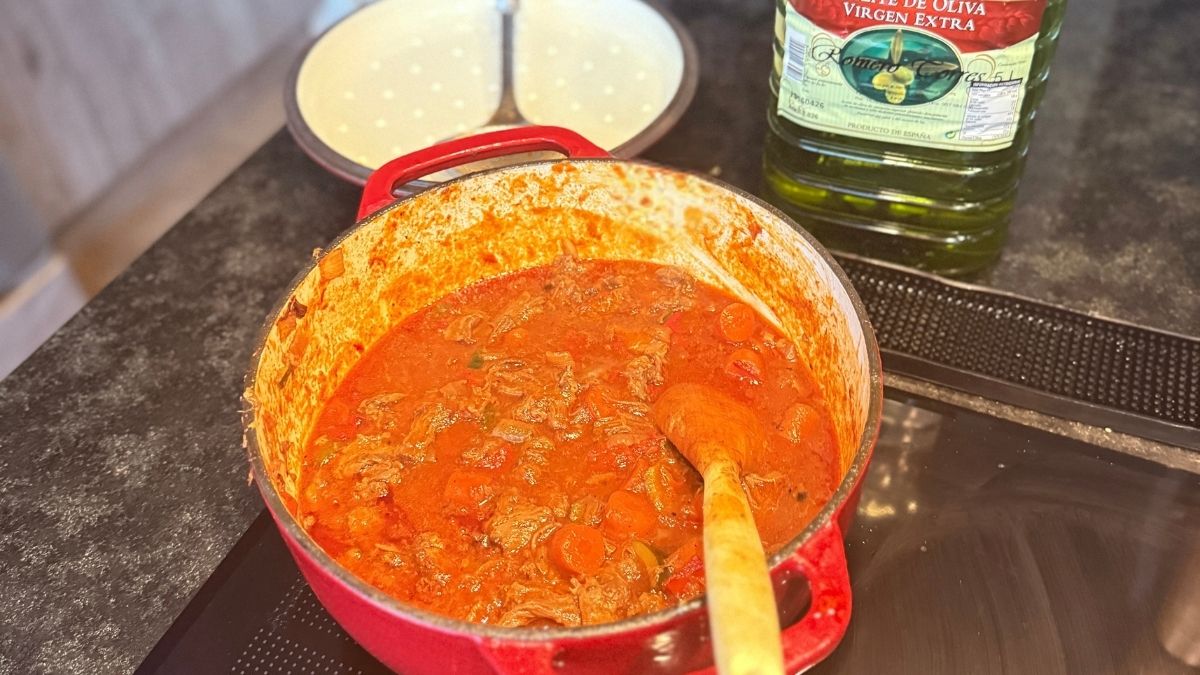
Rabo de toro con verduras – a slow Andalusian stew that brings a sense of calm
Why Andalusian food is so comforting
What is it about Andalusian food that feels so comforting, even when you cook it miles away from Spain?
It’s the combination of slow cooking, seasonal vegetables and flavours that don’t quite come together like this anywhere else. Sometimes you don’t have to be in a place to taste it — your kitchen can bring it to you.
The story behind this pan
It was one of those days when I missed Andalusia.
Not the sun or the mountains — you can fake those with a screensaver if you really want to —
but the smell: olive oil warming slowly, bay leaves stretching their backs, paprika softening before you even look at it.
So I told myself that cooking “something typically Andalusian” might help.
I googled Andalusian seasonal dish November and there it was: rabo de toro con verduras.
Oxtail that simmers for three to four hours, as if time itself has no rush down there.
Only one thing kept nagging: I hardly eat any carbs.
Which is, let’s say, not very Spanish.
In a country where bread is cutlery, potatoes count as vegetables and wine is almost water, “without” is a rare category.
But anything that doesn’t quite fit can be adapted.
So it became rabo de toro, but in a Cortijo kind of way: true to the flavour, lighter in execution and with a generous splash of self-irony.
And because we have two different eating styles at home, I ended up cooking two versions: the traditional one — with bread, potatoes and wine — and a lighter, low-carb version.
The history of rabo de toro (and why it’s such an honest stew)
Rabo de toro is a dish with a story that moves just as slowly as the cooking time.
It originated in Córdoba, Seville and Jerez — cities where bullfighting was part of daily life for centuries.
After a corrida every part of the animal was used. Not out of romance, but out of necessity and respect: if the animal fought for you, you used it completely.
The oxtail itself was never the star of the show.
It’s working meat: tough, full of connective tissue.
The kind of cut that only turns tender if you’re willing to give it hours.
Letting it simmer in wine, vegetables and bay leaves isn’t a luxury, it’s a requirement — and maybe that’s exactly why it feels so comforting.
Later it became a dish for feast days, big family Sundays and cold evenings.
In Córdoba they sometimes say:
“You don’t cook rabo de toro to eat quickly, you cook it to slow yourself down.”
And that’s true.
After three hours of gentle bubbling you don’t just have dinner, you have a quiet mind.
The traditional rabo de toro
Ingredients
• 1 kg oxtail
• 1 large onion
• 2 carrots
• 1 red bell pepper
• 3 cloves of garlic
• 1 tbsp tomato paste
• 250 ml red wine
• 250 ml beef stock
• 2 bay leaves
• 1 tsp smoked paprika
• Salt, pepper, extra virgin olive oil
Method
- Season the oxtail with salt and pepper and brown well on all sides.
- Add the onion, carrot, pepper and garlic.
- Stir in the tomato paste and smoked paprika.
- Deglaze with red wine; add the stock and bay leaves.
- Let it simmer gently for three to four hours.
Serve with bread, patatas fritas or crispy fried baby potatoes — that’s how we did it.
The Cortijo version (lighter, more veg, fresher)
The Cortijo version grew out of Dutch practicality and Andalusian creativity:
• Replace the red wine with 2–3 tablespoons of red wine vinegar
• Top up with stock until you reach 350–400 ml liquid
• Add extra vegetables in the last 30 minutes:
– courgette / zucchini
– aubergine / eggplant
• Serve without bread or potatoes, or with roasted vegetables on the side
The red wine vinegar makes the stew fresher, a little lighter and surprisingly elegant — without losing any of its depth.
Why this dish fits our place
Rabo de toro is the kind of dish that forces you to slow your pace.
You can’t rush it — just like you can’t hurry an Andalusian landscape to grow or build a Cortijo in one weekend.
It asks for attention.
It asks for a bit of surrender.
It asks you to stay with what is in front of you, instead of everything that still needs to be done.
Maybe that’s exactly why this dish fits our place so well:
it brings calm, scent, warmth — and a rhythm we recognise from our own story.
Frequently asked questions
How long should rabo de toro simmer?
At least three hours, preferably four.
Can I replace the wine with vinegar?
Yes — it will taste fresher and lighter.
Can I use a different cut of meat?
Chuck or braising steak works, but oxtail gives that typical silky, gelatinous tenderness.
What do you serve with it?
Traditionally bread or potatoes.
At home we often go for fried baby potatoes.
Can I make this a day ahead?
Absolutely — it actually tastes even better the next day.
Rabo de toro con verduras is a dish that comes to life slowly.
A stew that smells like Andalusia and tastes like patience.
Whether you make the traditional version or the Cortijo twist: it always brings a little quiet into your home.
Hasta luego
Thank you for reading all the way to the end — that means a lot.Come back any time you’re in the mood for another story.
Would you like an occasional update? I’d be happy to send you our newsletter now and then.
👉 Sign up here.
Hasta luego from Andalusia,
Daniëlle | Cortijo La Vista
 How can we help you?
